
Why OLED gaming monitors have incredible HDR and contrast
TL;DR:
- Contrast ratio is the difference between the brightest luminance a display can reach, compared to the darkest shade.
- OLEDs have infinite contrast ratio because each pixel can individually turn on and off, a big advantage of OLED technology.
- HDR (high dynamic range) further enhances contrast for realistic visuals.
OLED displays are known for their incredible contrast and HDR performance. But what does that mean, and how does OLED technology achieve those deep, rich blacks and stunning highlights? And further: are OLED displays worth the extra price for your gaming setup?
When talking about contrast or the contrast ratio in a QD-OLED or OLED monitor such as Alienware’s AW3926QW or AW2726DM, we’re referring to the difference between the deepest black level when a pixel is “off,” and the highest white level when a pixel is activated.
One of the unique features of OLEDs is they feature “per-pixel dimming.” That means each individual pixel can be independently dimmed or turned completely off, which essentially achieves what we call “infinite contrast ratio.”
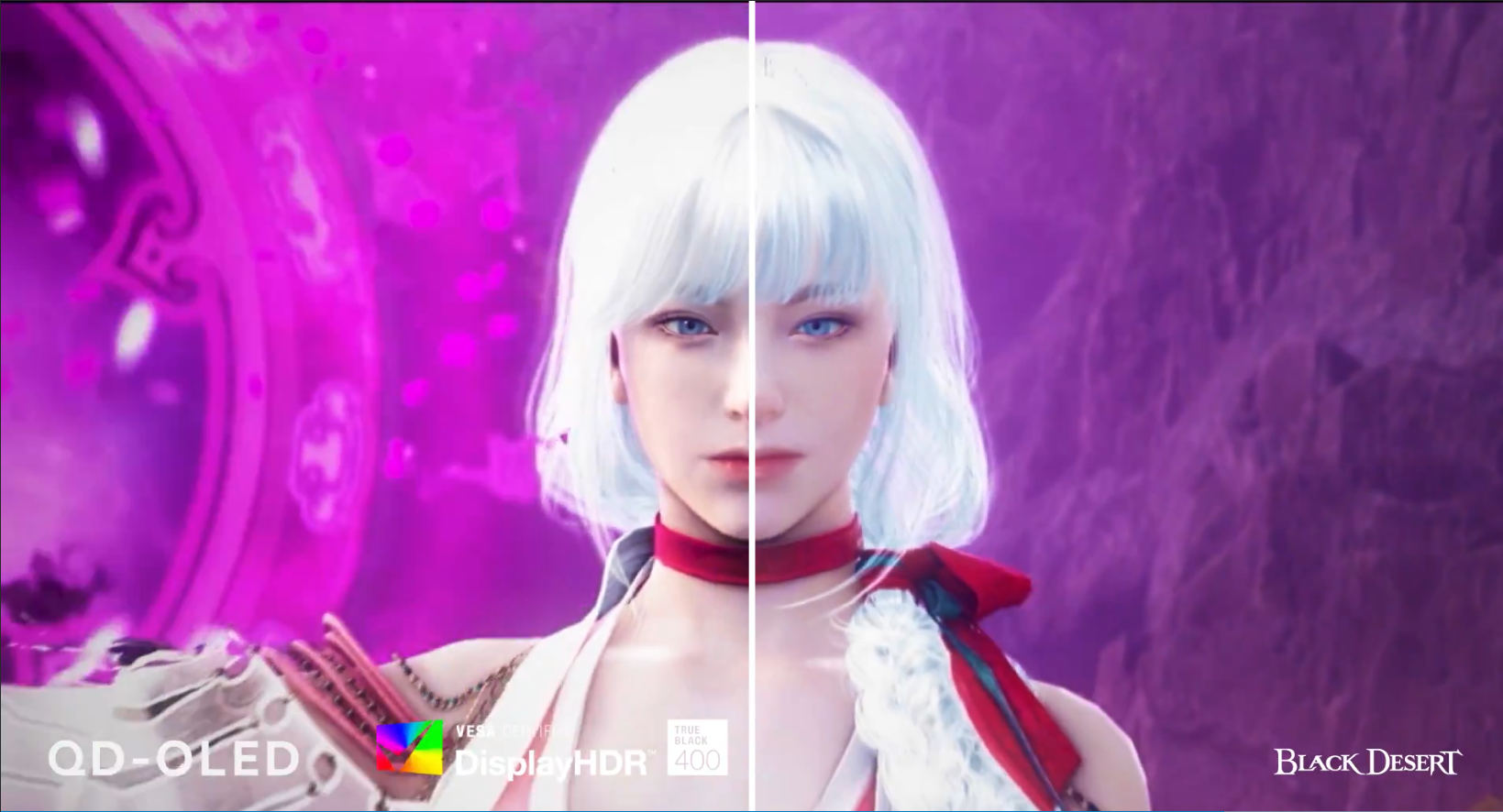
Because each pixel is self-emissive, when a pixel is off, it achieves “true black.” When comparing a panel’s max brightness to pure blackness, you reach a contrast ratio that is virtually “infinite.”
Compare this with a conventional LCD display that does not have pixel-level dimming, but instead uses a backlight that controls brightness of many pixels across a section of a screen. Because one light source is shared among many pixels, that light source cannot afford to be turned completely off.
That’s why, with conventional LCD monitors, even when a scene is meant to be totally black, you’ll still notice black levels are actually a deep gray, or washed out black; there’s still a light that is on behind the panel. While OLEDs can achieve infinite contrast ratios, LCD monitors may have contrast ratios of around 1000:1 to 3000:1, depending on the panel.
This precise contrast performance also means OLEDs can earn VESA DisplayHDR True Black certification, which is an extra layer of assurance of high dynamic range (HDR) performance. Proprietary HDR technology such as Dolby Vision adds even more color and contrast performance when viewing compatible content.
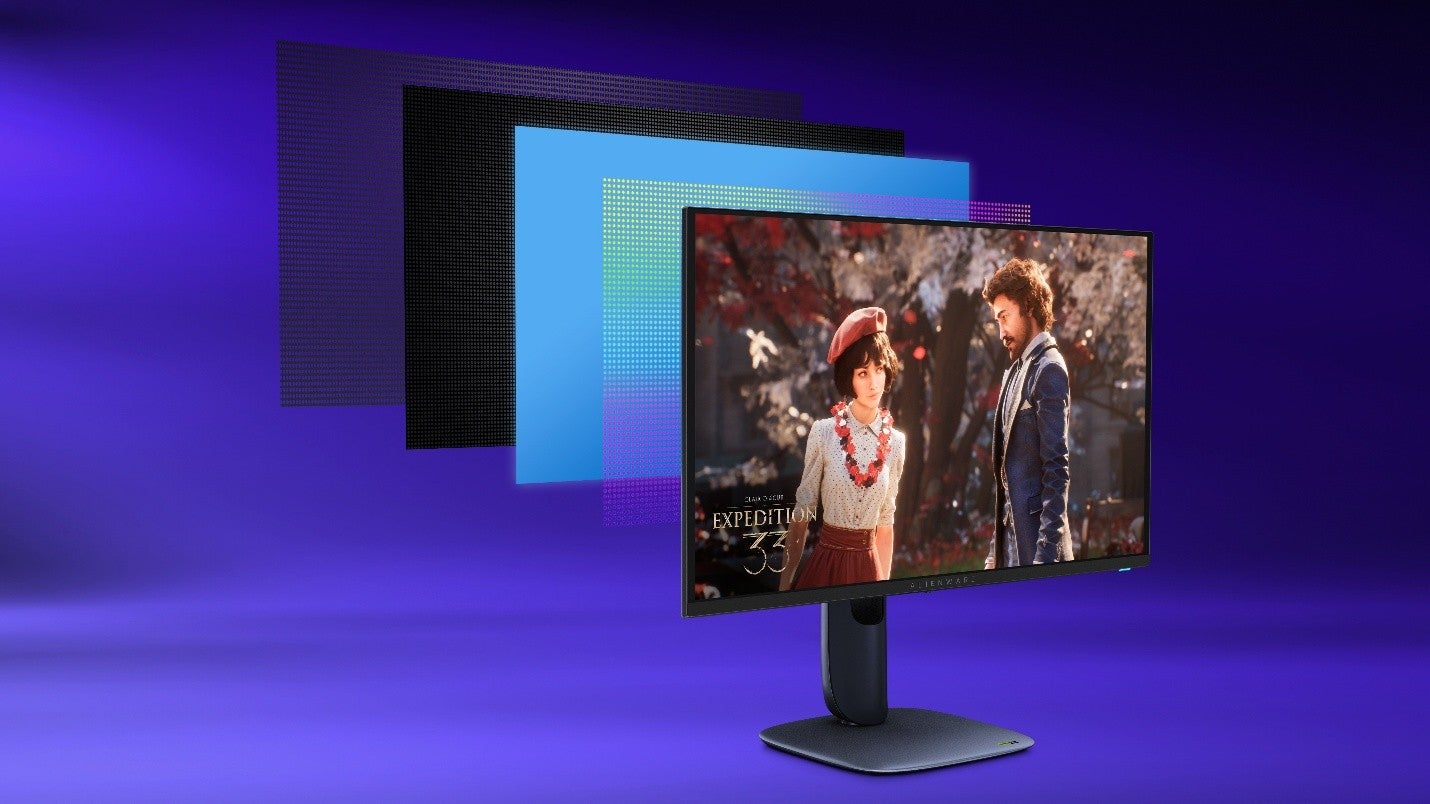
What does all this mean for the viewer? Thanks to OLED’s wide color coverage, scenes will be more lifelike and vibrant, with no washed out colors. Dark areas will be rich and inky alongside brights that pop stunningly in the same scene. Games and media that are specially tuned to take advantage of HDR look impressively bold. This all equates to a monitor that truly does look like a window into another world when playing games.
Alienware carries OLED and LCD displays – both of which have their own unique benefits. Make sure to check them out here.



Now Building: Alienware Retro Brick Kits!
TL;DR: Alienware announces the introduction of two new brick kits, made with Authentic Lego® bricks, which join the Area-51 desktop and desk in our community brick kit lineup

Optical vs Mechanical Mouse Switches: Which Is Faster?
Optical vs Mechanical Mouse Switches: Which Is Faster?

Why OLED gaming monitors have incredible HDR and contrast
Why OLED gaming monitors have incredible HDR and contrast

What are response times and why do they matter when gaming?
What are response times and why do they matter when gaming?

The Return of Area-51
BY MATT MCGOWAN | JANUARY 6, 2025 @ 8PM PT Alienware is reintroducing the iconic Area-51 back into the